Temperature
A cooler room promotes sleep. Most people sleep best between 60–67°F (15–19°C). Your bedroom temperature is a key lever you control.
Your physical environment directly influences sleep quality. Learn how temperature, light, sound, and air quality shape your ability to fall and stay asleep.
A cooler room promotes sleep. Most people sleep best between 60–67°F (15–19°C). Your bedroom temperature is a key lever you control.
Light suppresses melatonin. Complete darkness or a sleep mask helps. Even small light sources (clocks, devices) can disrupt sleep.
Consistent white noise masks disruptive sounds. Sudden noises wake you faster than continuous ambient sound. Choose what works for you.
Fresh, slightly humid air supports sleep. Aim for 30–50% humidity. Stale air or extreme dryness disrupts comfort and breathing.
Your eyes contain photoreceptors that signal your brain whether it's day or night. Even dim light tells your brain to suppress melatonin, the hormone that drives sleepiness.
Complete darkness is the ideal, but if you can't achieve it, a sleep mask is highly effective and inexpensive. Test yours before bed to ensure comfort.
In your evening routine, use warm-toned lights (amber, red) rather than cool white or blue light. This supports natural melatonin production without disrupting your circadian rhythm.
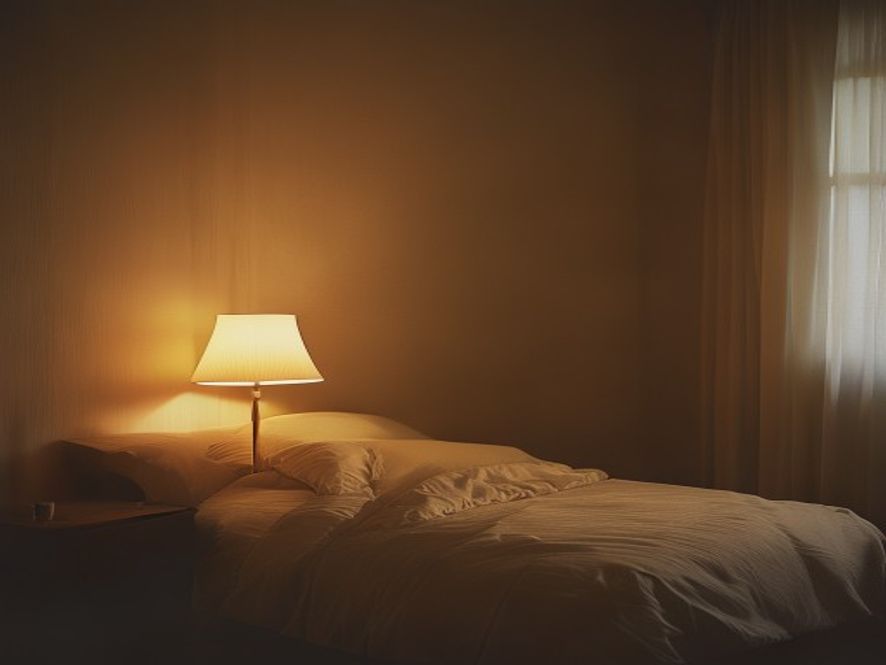
How would you rate each factor in your current bedroom?
Ratings below center? That's your priority area for improvement. Start with one element and refine over 2–3 weeks.
| Factor | Simple Solutions | Investment Level |
|---|---|---|
| Temperature | Adjust thermostat, use ceiling fan, open window, light vs. heavy blankets | Free–$50 |
| Darkness | Blackout curtains, sleep mask, cover light sources (clock, chargers) | $20–$80 |
| Sound | White noise machine, fan, earplugs, nature sounds app | Free–$60 |
| Humidity | Humidifier in winter, open window in summer, damp towel | $30–$100 |
| Comfort | Quality pillows, supportive mattress, breathable sheets | Varies widely |

Your bedroom should be associated primarily with sleep and rest, not work or stimulation. Remove work-related items, limit screens, and reserve your bed for sleep.
Clean sheets, a tidy nightstand, and a clear visual environment all contribute to a sense of calm that supports sleep onset.
Summer: Use fans, open windows in cool hours, light bedding. Aim for lower end of 60–67°F range.
Winter: Layer bedding, close windows, consider a humidifier. Aim for higher end of 60–67°F range.
Get a detailed environment assessment and personalized recommendations.
Schedule Consultation